
 Uncategorized
Masjid Quba: History, Virtues and a Visit Guide for UK Umrah Pilgrims
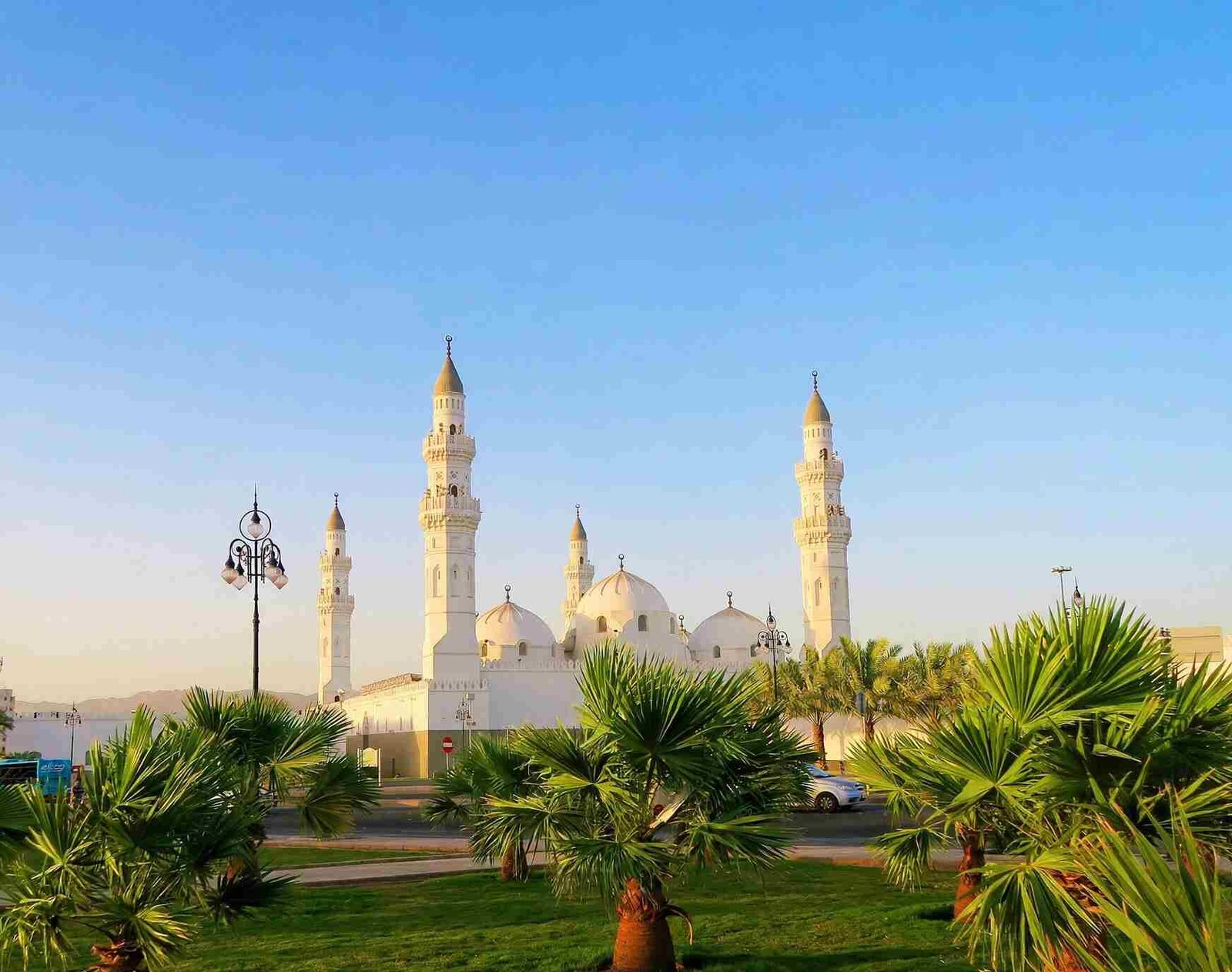
Masjid Quba in Madinah, Saudi Arabia, is recognised as the first mosque established by the Prophet Muhammad ﷺ during the Hijrah. It’s about 3–3.5 km from Masjid an-Nabawi. Make wudu at your accommodation before leaving, then pray two rak’ahs at Quba: the hadith describes a reward like that of an Umrah.
This is the historic Quba Mosque in Madinah, also called Masjid al-Quba or Masjid-e-Quba, not one of the local mosques with the same name in Britain. If you’re planning your Madinah days, give Quba its own window. It’s a short journey by car, but a 40–50 minute walk each way makes it more than a quick stop between prayers.
| Where | Madinah, about 3–3.5 km south-west of Masjid an-Nabawi |
|---|---|
| Why it matters | First mosque in Islam (622 CE); 2 rak’ahs here carry the reward of an Umrah |
| Getting there | 40–50 min walk, 10–15 min taxi, bus 390, buggy about 10 SAR |
| Best time | Morning after sunrise; Saturday is the Sunnah day to visit |
| Opening | 24 hours, free entry, no booking |
What happened at Quba during the Hijrah?
In 622 CE, the Prophet ﷺ and Abu Bakr (RA) reached Quba on the migration from Makkah. Quba was then a settlement outside Madinah, centred on a well and its date groves. The Prophet ﷺ stayed among Banu ’Amr ibn ’Awf and helped establish the mosque with his Companions before continuing into central Madinah. That’s what “the first mosque in Islam” means here: the first mosque established by the Prophet ﷺ in the Hijrah period.
The site dates to the seventh century; the building you enter does not. The white domes, four minarets and inner courtyard belong to a mosque rebuilt and enlarged over successive generations, including a major reconstruction under King Fahd in the 1980s. The King Salman expansion, announced on 8 April 2022, set out to increase the mosque’s area from 5,035 m² to 50,000 m². It is planned to hold up to 66,000 worshippers. That’s a target, not a statement of how many people the mosque holds today.
Is Masjid Quba mentioned in the Qur’an?
Surah At-Tawbah 9:108 speaks of a mosque ‘founded on righteousness from the first day’. It does not name Quba. Ibn Kathir connects the verse’s context to Quba, in contrast with Masjid ad-Dirar, the mosque built to cause harm and division. A report in Sahih Muslim also records the Prophet ﷺ identifying his own mosque as the one founded on piety. Ibn Kathir explains that the description applies to Quba and that the Prophet’s Mosque is even more deserving of it. There’s no need to leave either report out.
How do you follow the Sunnah when visiting Masjid Quba?
Start at the hotel, not at the mosque door. The shorter hadith in Jami’ at-Tirmidhi 324 and Sunan Ibn Majah 1411 likens prayer at Quba to Umrah. The fuller wording in Ibn Majah 1412 describes someone who purifies themselves at home, goes to Quba and prays there. For a traveller, make wudu at your accommodation before setting off.
At Quba, offer two ordinary rak’ahs at a suitable time. That is what the Prophet ﷺ did, as recorded in Sahih al-Bukhari 1194 and Sahih Muslim 1399b. The Quba narrations don’t prescribe a special surah, a particular spot inside or a separate formula for your intention. If the congregational prayer is starting, join it rather than beginning a separate voluntary prayer.
Ibn ’Umar (RA) reported that the Prophet ﷺ visited every Saturday, sometimes walking and sometimes riding. Saturday is a good choice if it fits your stay. It isn’t a condition of the reward, and neither is walking. Take the taxi if that lets your family arrive with enough energy to pray without being hurried.
From Masjid an-Nabawi to Quba: which transport should you take?
Quba is roughly 3–3.5 km south-west of Masjid an-Nabawi. For directions on foot, look up Quba Walking Trail as well as the mosque itself. The trail is a dedicated pedestrian route; your hotel door, the mosque exit you use and your pace all affect the time you’ll need.
| Walk the Quba trail | Allow 40–50 minutes each way at a steady pace, before breaks. Carry water and wear shoes you’ve already walked in. | A cooler morning, with enough time to stop. Walking out and taking a taxi back is a good compromise. |
| Taxi or ride-hailing | Allow 10–15 minutes in the car as a planning estimate, plus pickup time. Check the live quote or agree the fare before getting in. Ask whether a return quote includes waiting. | Travelling with older relatives, young children or anyone who needs a shorter walk. |
| Electric buggy or golf cart | Buggies are reported along the walkway, boarding near Masjid Ghamamah (Gate 309–310 area), about 10 SAR one-way and 10–12 minutes. Ask locally where they’re boarding that day and whether there’s a return service. Don’t build the outing around finding one. | A useful option if one is there and everyone in your group can board comfortably. |
| Madinah city bus | Take route 390 (King Fahd District – Quba Mosque), 6:00 am–11:59 pm, flat fare SAR 3.45 (official Madinah Bus app, Oct 2026). It doesn’t start at the Prophet’s Mosque, so check the app for the nearest boarding point and live service. | A budget option when you aren’t trying to get back for a fixed appointment. |
| Sightseeing bus | The City Sightseeing Red Route lists both Qiblatain and Quba. This is a separate service from the city bus; check the operator’s route and ticket before buying. | A wider Ziyarat day, rather than a single trip to pray at Quba. |
If someone in your group uses a wheelchair, ask your hotel or driver about both the drop-off and the step-free route from there to the prayer area. “Drops you at Quba” doesn’t tell you how much walking is left. Before you leave the hotel, agree where you’ll meet after prayer; choose a landmark outside rather than assuming everyone will leave through the same door.
Quba Mosque timings: open all day doesn’t mean pray at any time
Visit Saudi lists Quba Mosque as open 24 hours, with no advance booking required. That’s the opening-time answer, not a salah timetable. Check the Madinah prayer times for your date, and ask locally about iqamah or Friday arrangements if you plan to join the congregation. Follow any entrance instructions on the day.
For a visit focused on the two voluntary rak’ahs, go in the morning once the sun has risen well clear of the horizon. “Go after Fajr” is sensible advice about cooler walking conditions, but it isn’t advice to pray nafl as soon as you arrive. There is also a general restriction on voluntary prayer after Asr, with scholarly differences over prayers offered for a specific reason. If evenings suit your group better, go after Maghrib rather than trying to fit the two rak’ahs into the last stretch before sunset.
If you have a Rawdah slot or a coach departure, don’t squeeze Quba in beforehand. The walk alone is 80–100 minutes return on the estimates above. That’s before prayer, a rest or finding your driver.
Which Ziyarat stops make sense after Quba?
| Nearby stop | How I’d fit it in |
|---|---|
| Masjid al-Jum’ah | The simplest add-on. Saudipedia places it about 900 m north of Quba and associates the site with the Friday prayer the Prophet ﷺ led on his way into Madinah after the Hijrah. Check the walking route from the exit you actually use. |
| Ghars Well | A historic well around 1.5 km north-east of Quba, not a guaranteed stop. The official listing said closed for maintenance (Nov 2026), but recent visitor reports suggest it may have reopened — check before you go. |
| Masjid al-Qiblatain | A separate mosque, better paired with Quba on a driven Ziyarat route. The links to the change of qiblah can be confusing: Sahih al-Bukhari also records worshippers at Quba turning towards the Kaaba during Fajr when the news reached them. That doesn’t make Quba and Qiblatain the same mosque. |
Want the quieter sites most pilgrims miss? See our forgotten Ziyarat sites in Madinah.
For a longer outing, use our guide to Ziyarat places in Madinah to decide what goes with Quba and what deserves a separate visit. For the full route, timings and costs, see our guide to planning Madinah Ziyarat.
Frequently asked questions about Masjid Quba
Does praying at Quba count as performing Umrah?
No. The hadith describes a reward like that of an Umrah, not the performance of Umrah itself. Quba is not a miqat either. For pilgrims leaving Madinah for Makkah to perform Umrah, the route’s miqat is Dhul Hulayfah, also known as Bir Ali. If Makkah is your next stop, see our guide to Ziyarat places in Makkah.
Is there a special dua for entering Masjid Quba?
Use the ordinary mosque-entry dua: Allahumma iftah li abwaba rahmatik — “O Allah, open for me the doors of Your mercy.” The Quba narrations cited above don’t prescribe a separate dua for this mosque. You can make your own dua after prayer.
Can women pray at Masjid Quba?
Yes. There are separate prayer areas for women. Follow the signs or ask an attendant which entrance is in use, especially if someone in your group needs step-free access.
Can I pray two rak’ahs at Quba after Asr?
There is a general restriction on voluntary prayer after Asr until sunset. Scholars differ about exceptions for prayers with a specific reason; in the Hanafi school, voluntary prayer after the obligatory Asr prayer is generally avoided. If you’re planning the outing around those two rak’ahs, pick a morning slot or go after Maghrib rather than trying to settle the question when you arrive.
My pick: Set aside one morning after sunrise, make wudu at your hotel and take the Quba trail one way if everyone is up for it. Pray two rak’ahs, sit for a few minutes and walk back or take a taxi to Masjid an-Nabawi for the next prayer. Don’t try to add Uhud, Qiblatain, Masjid al-Jum’ah and Masjid al-Ghamama into the same short outing. Pick one add-on, such as Masjid al-Jum’ah if you still have time; don’t rush your prayer just to fit in another stop.
Planning the trip itself? See our Umrah packages from the UK.

